
Siege of Paris Dinner
Thursday 3rd April 2025
Edgbaston Golf Club, Birmingham
Sponsor: Alysa Salzberg

Menu Designed & Printed by Roger Hale

The Club welcomed author Alysa Salzberg and her family to an evening devoted to the gastronomic curiosities of the Siege of Paris in 1870-71. Having used the siege as a historical backdrop for her fictional first novel, Hearts at Dawn, Alysa is a recognised authority on the subject. Her passion for the dinner’s theme shone through and the assembled throng were treated to tales of the capital’s poorer citizens diet of rats, cats and dogs, while their wealthier neighbours enjoyed a more exotic diet curtesy of the local zoos. As the Prussian forces encircled the city the increasingly desperate Parisians were no longer able to feed the animals. With much regret the unfortunate beasts were slaughtered and then sold to upmarket restaurants where dishes such as Elephant Consommé, Wolf Haunch in Deer Sauce and Stuffed Donkey’s Head appeared on menus.
Fortunately, for many, the Buckland Club did not produce such items. However, Head Chef Chris Haynes and his team at Edgbaston Golf Club were able to supply a tasty meal that included plenty of onions with the onion soup as well as a delicious kangaroo stew. Wolf even appeared on the menu, although in the form of some tremendous wines from the Loire Valley courtesy of Monsieur Loup (aka Wolf) in Cravant-les-Côteaux.

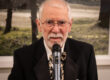
Sponsor, Alysa Salzberg, in full flow.


Canapés – Sardine Pâté with Radish on Siege Toast
Siege Bread Made by Roger Hale & Hazel Riggall


Onion Soup Without the Onion
Although it was tempting to serve the soup without onion, common sense prevailed and members & guests were treated to a delicious recipe with plenty of flavour. Gruyère, a hard cheese that was eaten during the siege, topped some Siege Bread which was provided by EGC.

Civet de Kangourou, Petit-Pois au Beurre, Boiled Potatoes
The menu failed to deliver any antelope, however the Kangaroo Stew was unbelievably tasty and far superior to most beef casseroles.

Cream of Rice
Made with oat milk and flaked chocolate the Cream of Rice conjured up memories of school days past. An interesting dish.

At the end of the dinner our sponsor, Alysa Salzberg, was presented with her own Siege of Paris souvenir to commemorate a fabulous evening.
Siege of Paris Dinner – Minutes
I must begin with an apology for my Tony Hancock minutes reaching the unacceptable length of 7 minutes and 44 seconds, the Buckland Club equivalent of an Emmerson Lake and Palmer triple live album. Normal service is resumed and we’re back on track with 5 minutes 40 seconds this evening.
The Siege of Edgbaston Golf Club took place from 3rd April 2025 until 3rd April 2025 and ended in the capture of The Buckland Club by forces of the various states of the North Quinton Federation, led by the Kingdom of Northfield. The siege was the culmination of the Quinto-Cotteridge war, which saw the attempt to reassert its dominance over continental Europe by declaring war on The Buckland Club.
With no provisions in store The Buckland Club was forced to be imaginative in designing its menu as they could be holed up in the Golf Club for 4 Months like The Siege of Paris, luckily it ended up as just under 4 hours.
On arrival at EGC we were greeted with wandering plates of Sardine Pate. Childhood memories came flooding back and I’m being handed a sardine paste sandwich on white bread through the kitchen door and told not to come back until teatime, bit of a harsh way to treat a 21-year-old but they were different times. Siege Bread sounds tempting doesn’t it, Roger Hale and Hazel Riggal experimented with many recipes but settled on a delightful mix of gravel, straw and dried dog bones …delicious. Hazel’s bread contained siege-inspired ingredients including rye flour, chickpea flour, and pea flour. Roger created two versions of siege bread. The first contains ingredients like dried and pounded potato peelings, green and red lentils, buckwheat flour, and rice flour. The second version of Roger’s bread contained actual straw, which it was decided by the Committee was delicious, but for some other reason, it wouldn’t be used on the night. The bread during the Siege was so terrible that pieces of it were kept as souvenirs.
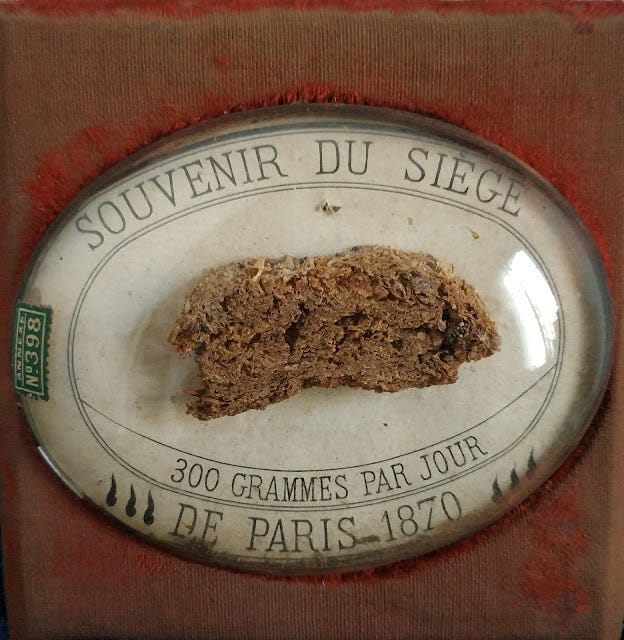
During the siege, bread was made using oats, bran and sawdust. It sounds awful but most likely better for your gut health than 80% of UK bread made using the Chorleywood method developed in 1961 which adds extra salt, yeast, chemical improvers, anti-fungal agents and hydrogenated and fractional fats, emulsifiers E472, E411, flour treatment agent, Niacin, Thiamin, eye of newt, toe of frog, wool of bat and tongue of dog to maximise efficiency at the expense of the consumers intestinal health. To balance this view, I must add that Gordon Polson from The British Federation of Bakers says, ‘it’s fine’, ironic that when I typed this his name was autocorrected to Gordon Poison. Again, in the spirit of fairness and following legal advice, I don’t believe that all bread is poisonous.
Many options were discussed for this meal maybe starting with:
Pâté de Rat sur Croûte de Brioche: city rat, corn-fed and sewer-aged, minced with garlic and a whisper of Armagnac.
Tournedos de Chien à la Sauce Bordelaise: tender medallions of spaniel, seared and finished in a sauce of shallots and red wine
Plats de Resistance
Chat à la Provençale: alley cat stew with black olives, tomatoes, and rosemary, described as “mischievously gamey.”
Followed by Blue Cheese, which would have been good, except it was Brie
We could have had our pick of meats for our dinner as many animals were consumed during the siege. One meal that was definitely off the menu was a delicious bowl of pasta and tomato sauce, both of which were readily available during the siege, however the residents didn’t like the taste and chose to eat dog, rat, cat and even elephant over this tasty and nutritious meal.
Luckily, I guess this being France they had reasonably plentiful supplies of wine, mostly Burgundy. Wealthier Parisians had to make do with Claret and Champagne.
Restaurant Voisin served Chateau Palmer 1864 and Moutin Rothschild at their Christmas Dinner paired with Elephant, Kangaroo and Antelope, other meals were Consommé D’Elephant, Camel Tail Soup, Bear Chops in Pepper Sauce and Roast Swan. Elephant was said to be tough and gamey, most people preferred to eat Giraffe as it was ‘Head and Shoulders above other meat.
Thanks to our Sponsor, Alysia Salzburg, we learned that cat tasted similar to rabbit and that dog meat was not a popular foodstuff. Our own dog eating Chairman, Andrew Morris, confirmed that dog tastes, and I quote ‘alright’, not a Mastiff recommendation. Andrew normally has a Beagle eye for quality food and usually Setters a high bar, he did say that his dog meal was not a Terrier(ble) choice … but it did give him the Shitzus.
Lovely, tasty pigeons were generally not eaten as they were considered the heroes of the siege as they were the only means of communication. They carried over 100,000 messages. They were considered almost sacred. A pigeon returned to Paris carrying a small glass capsule, no larger than a thimble. Inside was a transparent strip of film, with faint lines of text visible only under magnification. When projected through a lantern, the words of thousands of Parisians – family news, official orders, patriotic slogans – appeared on a wall, glowing in the dark room of the postal office. Our own feral pigeons are descendants of homing pigeons, they enjoy human company and I think we forget how they have helped us in the past. If pigeons had a motto in 1870, it would’ve been: “Neither snow, nor shot, nor hungry Parisians shall stop our flight.”
Other interesting facts include that: pigeons can count to nine, in the 1970s NASA trained pigeons to peck at images of clouds to help identify patterns in satellite photos & pigeons can recognise themselves in a mirror. Pigeons mate for life and are seen as symbols of fidelity and eternal love … on the downside their droppings ruin buildings and the protective lacquer on expensive cars, they carry several human transmissible diseases and they eat tramp vomit. In America pigeons were trained to peck at a picture of a target such as a battleship on a screen. Three pigeons were put in the nose of a missile and as it flew the pigeons would peck at the target to keep it centred, mechanically steering the fins of the missile. It worked perfectly but was cancelled anyway. I can only presume Americans were concerned about a being with so little brain and empathy ever overseeing anything remotely dangerous. In 1955 a research project showed that pigeons can tell the difference between paintings by Monet and Picasso. Another example of vital research work, hats off to our academics.
Including many other important research papers such as:
- 1994 Ergonomics Journal published a paper – ‘Impact of Wet underwear on thermoregulatory responses and thermal comfort in cold’ apparently finding that wet underwear is less comfortable than dry underwear.
- If anyone suffers from hiccups this evening you will be grateful to hear that a 1990 study proved that the best cure was rectal massage, I’ve brought rubber gloves with me this evening just in case.
- Can chickens walk like dinosaurs, involved strapping tails to chickens, cost $390,000, turns out they can with some difficulty.
- Can rats learn to drive cars, 2019 study, cost $1 Million, result – no they can’t, they are too small
- African giant pouched rats* (Cricetomys gambianus) have been trained to locate earthquake survivors in rubble wearing backpacks equipped with cameras, microphones and GPS
- My favourite though is the 2005 Yale experiment where they taught monkeys to use silver discs as money in exchange for food, they learned that the tokens had value and ended up using them for gambling and monkey prostitution.
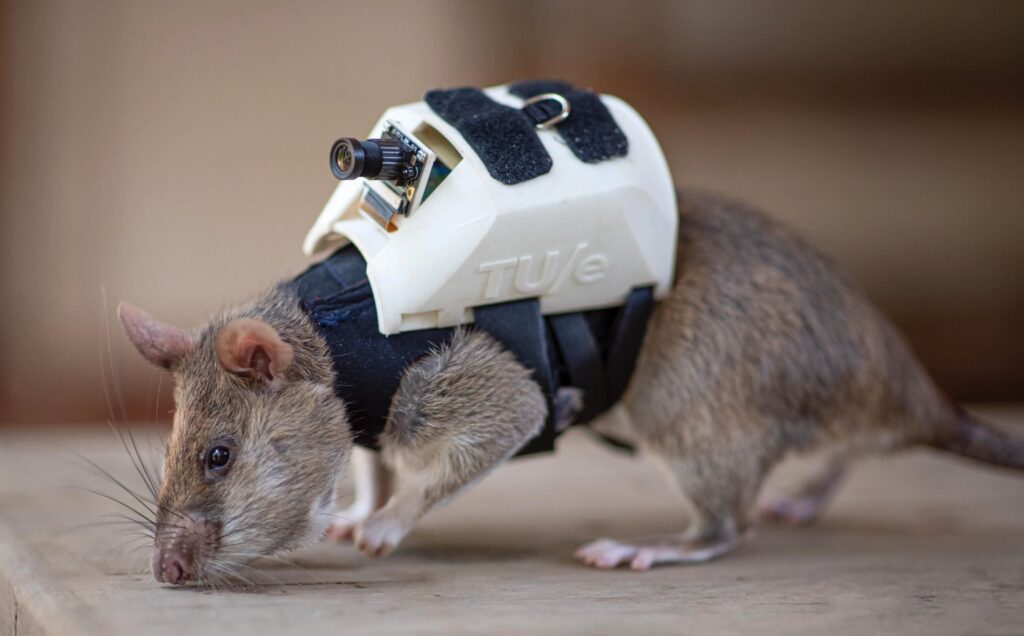
*This had nothing to do with the SoP Dinner
We carried on with our less adventurous but considerably more edible menu, our starter was Onion Soup Without the Onion with onion, this was the highlight of the meal, beautifully made and extremely tasty. I’ve avoided onion soup in the past due to several poor attempts, but this was spot on and luckily the ‘no onions’ meant it was swimming in onions. In the same vein, this speech comes with no awful puns and close to zero intellectual content.
We quickly hopped onto our main course of Kangaroo Stew, which was delicious, I’m not sure why we don’t eat more Kangaroo as I find it preferable to many meats.
Kangaroos were invented in 1770 by Joseph Banks; I think Google might have let me down again? Interesting facts about kangaroos are that they are all left-handed and have three ears, much like Davey Crockett, although a Kangaroos third ear isn’t on the wild frontier but rather an ability to detect ground vibrations, which might have helped Davey Crockett detect the Mexican Army that killed him. Crockett and his men joined the forces of William B Travis in the fight for Texas Independence, that’s my dad’s name but he never mentioned the war.
Next up was Cream of Rice, I’ve disliked rice pudding since my schooldays and sadly this course didn’t change my mind. I’m not sure it benefits from being served al dente. Every time I cook pasta I always ask my partner, ‘Would you like the pasta al dente or would you prefer to eat it inside?’ Always makes me laugh, although Marie is laughing less after hearing it around twice a week for almost 40 years. Unfortunately, this dish was added to a list of only 4 things I’ve left uneaten in the last 60 years, the other 3 were:
- Fish and chips from a seaside outlet in Minehead, after 2 bites I took all the portions from my family and threw them in the bin then vowed to them that I would walk relentlessly with every fibre of my being until I found the finest fish and chips known to humanity, luckily there was a decent fish and chip shop 4 doors down so not a massive quest in the end.
- A rancid foul-smelling turbot in Norfolk that was so rank it almost set the fire alarm off.
- A meal cooked by my old flat mate at university; tripe, mashed potato and half a boiled egg, served flat side down so that the whole meal was white, off white and light cream. I didn’t want to hurt his feelings so I just said ‘This looks shit, you absolute freak, I’m off to get a curry’ – true story.
Maybe I’m being a little harsh, we were after all paying tribute to a siege where one of the delicacies was rat. Stories of the time say that people thought rat wasn’t too bad, although elephant wasn’t as pleasant as it looked. However, as they say, the hardest part about eating elephant is finding a pot big enough and a conscience small enough.
Our sponsor for the evening, an American in Paris, Alysa Salzburg was extremely knowledgeable and enthusiastic. She bravely brought her charming family along who were finely dressed, not sure if it was period dress or that’s how people dress in Paris. I’ve never been there but I have been to Tipton and they dress differently there so it must be a possibility.
Alysa has said that she loved the idea of bringing the siege food to life, even though it was terrible. Alysa imparted many facts and fascinating background on the siege of Paris, luckily, she managed to fit 3x as many words into a sentence as would be expected and appeared to dispense with breathing whilst talking which certainly sped things up and kept us informed. Alysa’s lively delivery certainly made for an informative and entertaining evening.
We finished the evening with Absinthe, which was available during the siege, also a particular favourite of mine and a drink that one of its ingredients links William Shakespeare and the biggest nuclear accident on Earth. Wormwood is mentioned in both Romeo and Juliet and Hamlet and the Ukrainian City of Chernobyl was named after a Ukrainian name for Wormwood.
Yet another delightful and informative meal, many thanks to Alysa Salzburg for her edible and fascinating sponsorship. At the end of the dinner Alysa was presented with a small piece of Roger and Hazel’s siege bread mounted in a frame, which she seemed delighted with, saying ‘This gesture blew me away. I truly can’t express how moved I am by the thoughtfulness behind it’.
Dave Travis, Minutes Secretary
Minutes delivered at the Anglo-Italian Dinner
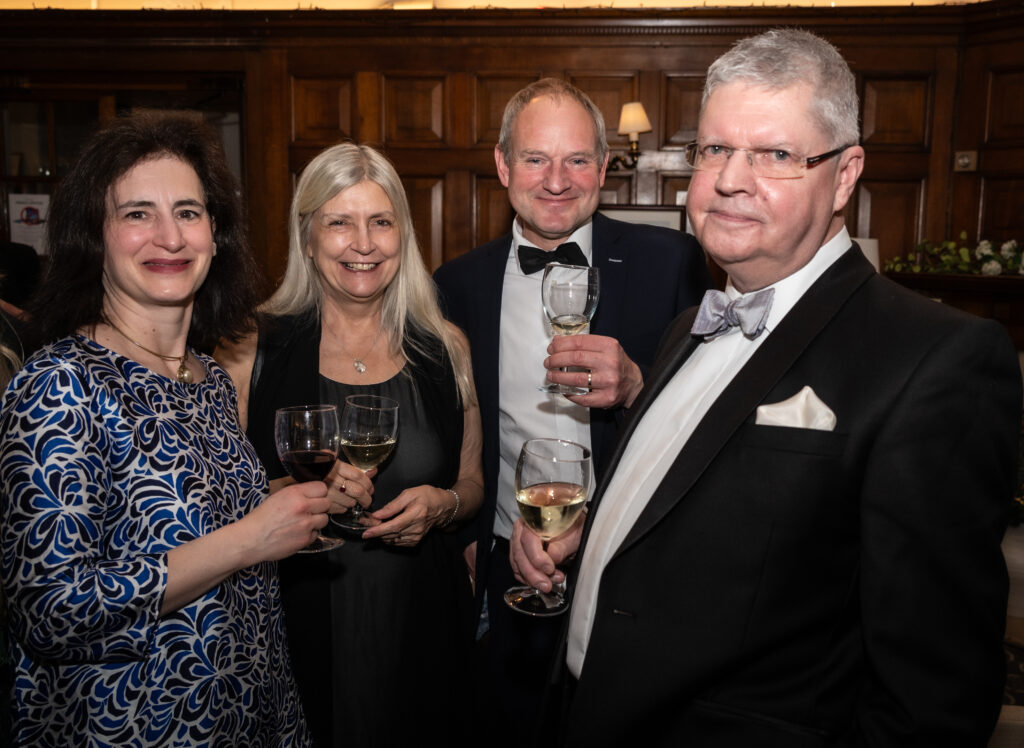
Committee members Nigel Beecroft and Dominic Siggins (RHS)
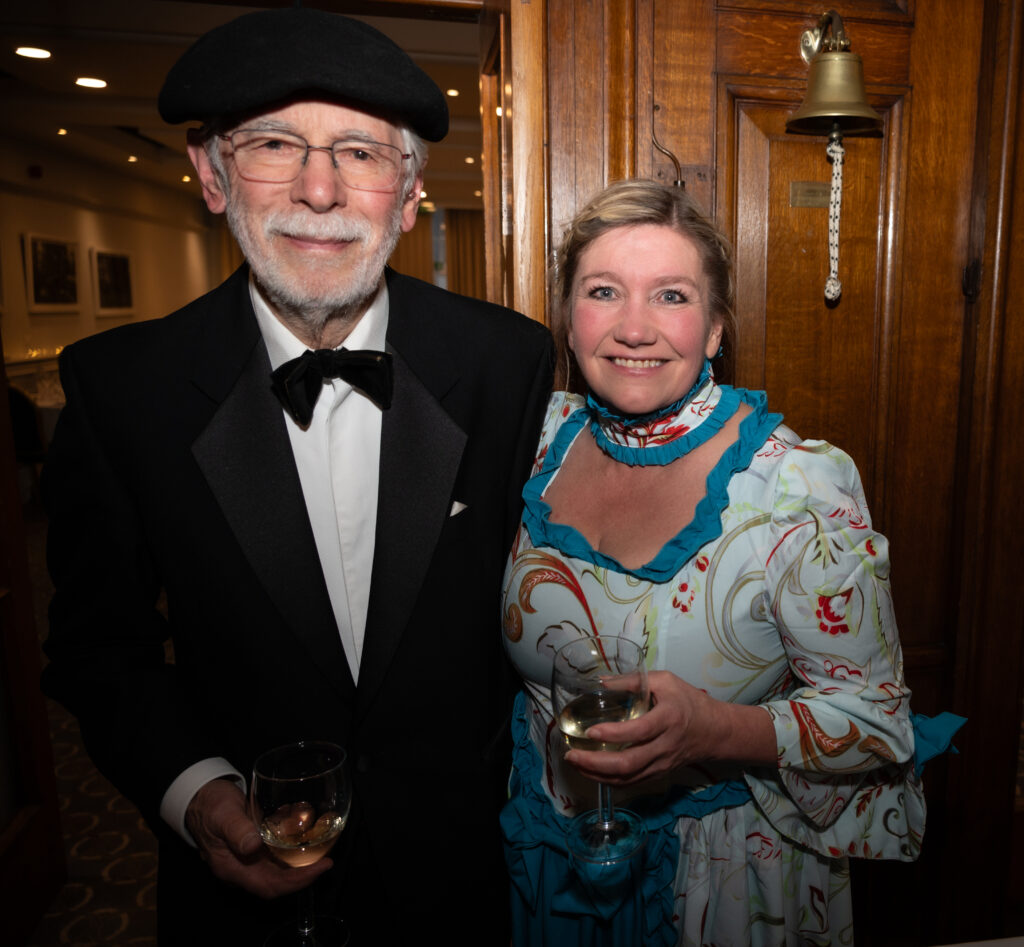
Chairman Roger Hale, looking his Parisian best